Lichen on Your Roof and Why It's So Stubborn
You've probably noticed the crusty grey and orange patches spreading across your roof and wondered what on earth they are. That's lichen, and if you've tried to scrub it off, you'll know it clings on far harder than the soft green moss beside it.
Lichen is one of the most stubborn things that grows on a roof, and Edinburgh gives it close to ideal conditions. This guide explains what it actually is, why it's such a pain to shift, and how a proper clean deals with it without wrecking your slate in the process.
The quick answer: Lichen is a tough, crusty organism that bonds tightly to slate and tile, and it's stubborn because it grips the surface hard and grows back slowly, so it needs a gentle chemical treatment rather than brute force.
1. What lichen actually is
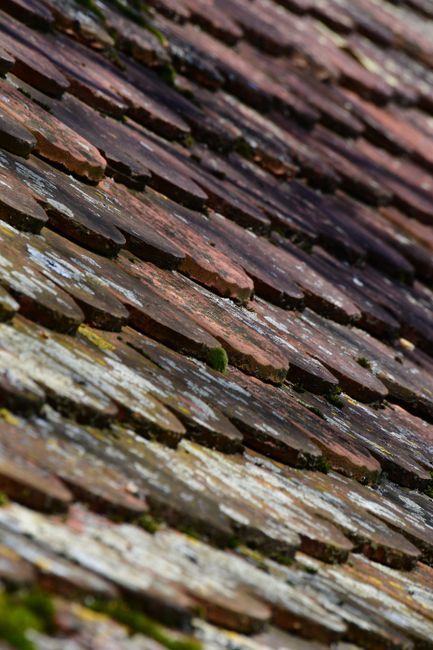
Lichen isn't a single plant. It's a partnership between a fungus and an alga living together, which is part of why it's so hardy and why ordinary weathering barely touches it. The fungus grips the surface while the alga feeds them both.
On a roof you'll usually see it as flat, crusty rosettes or little leafy patches in grey, green and rusty orange. It's the kind of growth people mistake for staining until they get up close and realise it's very much alive.
2. Why Edinburgh roofs suit it so well
Lichen loves clean, damp air, and Edinburgh has plenty of both. The moist air rolling in off the Firth of Forth, the frequent haar, and the city's cool, wet winters keep roofs damp for long stretches, which is exactly what lichen wants.
It also favours the older, textured surfaces common here. Weathered slate on a Victorian tenement or a period home in the New Town gives lichen tiny footholds to anchor into, far more than a smooth modern tile would.
3. Why it grips so hard
The reason lichen resists a scrub is that the fungus pushes root-like threads into every pit and pore of the slate. It isn't just sitting on top like dust; it's physically keyed into the surface, so scraping often leaves the base behind.
That firm grip is also why forcing it off is a bad idea. Attack weathered slate too hard and you can lift the surface with the lichen, which is the last thing you want on an old Edinburgh roof that's meant to last generations.
4. Why it grows back slowly but surely
Lichen is a slow grower, which cuts both ways. It can take years to build up into thick patches, so a roof can look fine for a long time and then seem to turn crusty all at once, especially on shaded, north-facing slopes.
Because it's slow, though, a good clean buys you real time. Once it's properly treated and killed off, lichen is in no hurry to return, and a roof in a spot like Bruntsfield or Corstorphine can stay clear for a good while afterwards.
5. How it's cleared the right way
The sensible way to tackle lichen is a soft wash, which is low-pressure water paired with a biocide treatment. The treatment kills the organism down into the surface rather than just knocking the top off, so it stops growing back quickly.
After treatment, the dead lichen loosens over time and weathers away, sometimes with gentle help. It's a slower, kinder process than blasting, and on Edinburgh's slate that patience is exactly what protects the roof.
6. What not to do
Reaching for a pressure washer or a wire brush is the common mistake. Both can strip and crack slate, drive water underneath, and still leave the anchored base of the lichen in place, so you get damage without a lasting result.
Harsh household chemicals are another trap, since they can run off onto sandstone walls and plants below. A measured, roof-safe treatment applied by someone who knows Edinburgh roofs is far kinder to both the slate and the garden.
- What it is: A tough fungus-and-alga partnership, not simple dirt or staining.
- Why here: Damp coastal air and cool wet winters make Edinburgh roofs ideal for it.
- Why it grips: Root-like threads key into every pit in weathered slate.
- Slow growth: It builds up gradually but stays away a long time once treated.
- Right method: A soft wash with a biocide beats scraping or pressure washing.
Frequently Asked Questions
Is lichen actually damaging my roof?
It holds moisture against the surface and works into weathered slate, which does the roof no favours over time. It's also a sign of a damp, neglected surface, so it's worth clearing before it spreads.
Why can't I just scrub the lichen off?
Because it's keyed into the slate with root-like threads. Scrubbing tends to remove the top and leave the base, and on old slate it can lift the surface, causing more harm than good.
Will pressure washing get rid of it?
Not safely. High pressure can crack and strip slate and force water under the tiles, yet still leave anchored lichen behind. A soft wash with a treatment is the better route.
How long before lichen comes back after cleaning?
It's a slow grower, so a proper treatment often keeps a roof clear for years, particularly if the surface is kept an eye on and given the odd maintenance visit.
Is lichen worse in some parts of Edinburgh?
It tends to be heaviest on shaded, north-facing slopes and older textured slate, and the damp air off the Forth encourages it citywide, so most areas see at least some of it.
Lichen taking over your slate?
Ben's Roof Cleaning offers roof cleaning, moss removal and gutter cleaning across Edinburgh and Scotland, with over 15 years of experience. Get in touch or call 0131 202 2140
for a free, no-obligation quote.
Patience beats brute force with lichen
Lichen earns its reputation as the most stubborn thing on a roof, but stubborn doesn't mean impossible. Once you understand that it's a living organism gripped deep into the slate, the reason a quick scrub fails makes sense, and so does the slower, gentler answer. Treat it properly, give it time to weather away, and keep half an eye on those shaded slopes, and your Edinburgh roof can stay clear of those crusty patches for years to come.