Cleaning Moss Off a Flat or Low-Pitch Roof
If you've got a flat roof over an extension, a garage or a dormer, you'll know it seems to grow moss quicker than the rest of the house. You look out of an upstairs window one day and there's a green film creeping across it.
Flat and low-pitch roofs need a different approach from a steep slate slope, and getting it wrong can do real damage to the covering. This guide explains why these roofs attract moss so readily in Edinburgh, and how they're cleaned safely without punching a hole in your weatherproofing.
The quick answer: Flat and low-pitch roofs grow moss fast because water sits on them longer, and they're cleaned with a gentle low-pressure wash and treatment, never a jet washer that can split the felt or membrane.
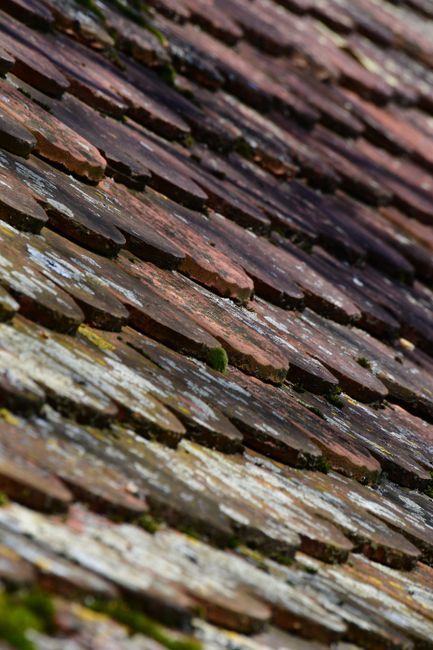
1. Why flat roofs grow moss so fast
Water is the whole story here. A steep roof sheds rain quickly, but a flat or low-pitch roof holds it in shallow puddles and damp patches, and that lingering moisture is a perfect nursery for moss and algae.
Edinburgh's weather pours fuel on the fire. With the regular rain, the haar drifting in off the Firth of Forth, and cool winters that dry nothing out, a flat roof here can stay damp for days on end, so growth gets going in no time.
2. The different flat roof coverings
Not all flat roofs are the same underneath the moss. Older ones are often built-up felt, while newer extensions tend to have a rubber EPDM membrane or a fibreglass GRP finish, and each reacts differently to cleaning.
Knowing which you've got matters, because felt can be brittle with age and a membrane can be nicked or torn. A cleaner who checks the covering first will treat a tired felt garage roof in Gorgie quite differently from a newer rubber roof on a Corstorphine extension.
3. Why pressure washing is a mistake here
It's tempting to blast a flat roof clean because you can see the whole surface, but that's exactly how flat roofs get wrecked. High pressure lifts the edges of felt, forces water into seams, and can cut straight through an aged covering.
Once water gets under the surface of a flat roof, you're looking at leaks into the room below, not just a stain. That's why the gentle approach isn't only kinder, it's the difference between a clean and a repair on these roofs.
4. The safe way to clean them
The right method is a soft wash, which is low-pressure water paired with a biocide treatment. The moss is cleared gently, and the treatment sees off the spores so it doesn't just bounce back after the next spell of Edinburgh drizzle.
Because these roofs are usually low and walkable, they can often be reached more easily than a steep slate slope, though care still matters. Working across a flat roof means spreading weight sensibly and keeping off any soft, waterlogged patches.
5. Drainage and standing water
Clearing the moss is only half the job on a flat roof. If water is pooling, the outlets and any surrounding gutters need checking too, because blocked drainage is often what let the moss thrive in the first place.
On a tenement outbuilding or a rear extension in an area like Leith, leaves and grit easily clog the small outlets. Keeping those clear so rain drains away is the best way to slow moss coming back between cleans.
6. Keeping a flat roof clearer for longer
A flat roof will never shed water like a pitched one, so it pays to stay on top of it. A treatment on a sensible cycle, plus keeping the drainage clear, holds the moss at bay far better than waiting until it's a thick green carpet.
Regular light attention also lets you spot early wear, a lifting seam or a soft spot, before it becomes a leak. On Edinburgh's damp flat roofs, that habit of checking is worth as much as the cleaning itself.
- Standing water: Flat roofs hold moisture longer, which is why moss takes hold fast.
- Know the covering: Felt, EPDM rubber and GRP fibreglass each need different care.
- No pressure washing: High pressure splits seams and cuts aged coverings.
- Soft wash: Low pressure plus a treatment clears moss and slows regrowth.
- Clear the drains: Free-flowing outlets stop water pooling and feeding new moss.
Frequently Asked Questions
Why does my flat roof get mossy so much faster?
Because water sits on it instead of running off. That lingering damp, made worse by Edinburgh's rain and coastal air, gives moss and algae ideal conditions to grow quickly.
Can I pressure wash a flat felt roof myself?
It's strongly advised against. High pressure lifts felt edges, drives water into seams and can slice through an old covering, turning a cleaning job into a leak and a repair.
Does the type of flat roof change how it's cleaned?
Yes. Brittle old felt, rubber EPDM and fibreglass GRP each respond differently, so a good cleaner checks the covering first and adjusts the method to suit it.
Why does the moss keep coming back?
Usually because water is still pooling. If the outlets and gutters are blocked, the roof stays wet, so clearing the drainage alongside the moss is key to a longer-lasting result.
How often should a flat roof be cleaned?
More often than a pitched one, given how it holds water. A treatment on a regular cycle with drainage checks keeps a flat roof far clearer through Edinburgh's wet months.
Moss creeping across your flat roof?
Ben's Roof Cleaning offers roof cleaning, moss removal and gutter cleaning across Edinburgh and Scotland, with over 15 years of experience. Get in touch or call 0131 202 2140
for a free, no-obligation quote.
Flat roofs reward a gentle hand
A flat or low-pitch roof asks for a bit more attention than the pitched slate on the front of the house, mostly because it holds the water that Edinburgh throws at it. Treat it gently, keep the drainage flowing, and stay ahead of the moss rather than letting it build into a carpet, and that felt, rubber or fibreglass covering will keep the room below dry for years. The trick is choosing the soft, patient method every time, and never the jet washer.